
Green Structural Material Comes to the Fore: Honeycomb Cardboard Promotes Packaging and Transport Innovation with Light Weight and High Strength
Against the macro backdrop of the global packaging industry accelerating its transition toward sustainability, a structural material inspired by bionics — honeycomb cardboard — is gradually becoming a replacement for traditional wooden packaging and certain plastic products, leveraging its unique mechanical properties and environmental friendliness. This composite structural material, made from kraft paper as the base substrate and manufactured through a specific process to form a honeycomb core that is then laminated with liners, demonstrates significant product advantages across multiple dimensions including lightweighting, load-bearing capacity, cushioning performance, and recyclability — driving material upgrades in logistics packaging, transportation, building decoration, and other fields.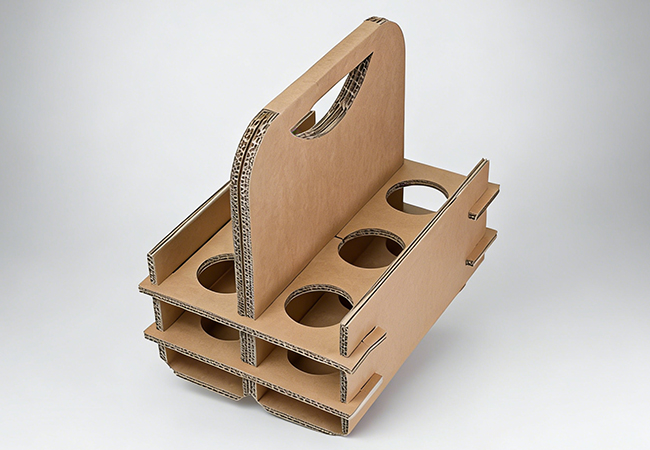
From the perspective of core product advantages, the most outstanding characteristic of honeycomb cardboard lies in its excellent specific strength and specific stiffness. Inspired by the hexagonal honeycomb structure of bees, this material can withstand considerable vertical pressure per unit weight. When a load is applied to the surface of honeycomb cardboard, the core layer disperses the stress evenly throughout the entire structure, forming a stable force-bearing system. This structural efficiency means that the raw materials required to achieve a given load-bearing capacity are far less than those needed for solid cardboard or wooden panels. For logistics packaging units that require frequent movement, reduced dead weight directly translates into lower transportation energy consumption and improved handling efficiency. Particularly in weight-sensitive applications such as air freight and export packaging, honeycomb cardboard replacing traditional wooden cases helps users significantly reduce packaging dead weight.
In terms of cushioning and protective performance, honeycomb cardboard also offers significant advantages. The air trapped within the honeycomb cells forms an air-cushion effect upon impact, and combined with the material's inherent elastic deformation capability, it effectively absorbs and dissipates impact energy. This cushioning mechanism differs from materials like foam plastic — honeycomb cardboard absorbs energy through structural deformation rather than material compression, providing a more pronounced ability to recover its shape. For the transport packaging of precision instruments, electronic equipment, ceramic products, and fragile goods, honeycomb cardboard provides uniform surface support, avoiding damage caused by localized stress concentration. By adjusting the cell size, paper grammage, and lamination process, the cushioning characteristics of honeycomb cardboard can be customized according to the protection requirements of different products.
From an environmental perspective, honeycomb cardboard is a typical green packaging material. Its base material is renewable paper pulp, making the material source sustainable. Unlike single-use plastic cushioning materials or wooden fumigation pallets, honeycomb cardboard can be directly fed into the waste paper recycling system after its service life, where it undergoes repulping, filtering, re-forming, and other processes to produce recycled paper products. Throughout its entire lifecycle — from raw material acquisition and manufacturing to end-of-life disposal — the carbon footprint of honeycomb cardboard remains at a relatively low level. Production scrap and trimming waste can also be recycled and reused, achieving a high material utilization rate. This characteristic aligns with global regulatory requirements for packaging waste management, particularly restrictions on single-use plastics under regulations such as the EU's Packaging and Packaging Waste Regulation (PPWR) and China's Law on the Prevention and Control of Solid Waste Pollution, providing policy-driven momentum for the market penetration of honeycomb cardboard.
From a market development trend perspective, honeycomb cardboard is undergoing a growth phase that transitions from a single-function product to diversified application solutions. In its early days, honeycomb cardboard was primarily used in military applications such as aviation pallets and missile packaging cases, where technical barriers were relatively high. As manufacturing processes matured and production costs declined, the application scenarios for honeycomb cardboard have expanded significantly. Transport packaging represents the largest current application segment in terms of demand, including export equipment packaging, heavy machinery transport pallets, automotive parts returnable bins, and cushioning liners for home appliances. Among these, the export packaging segment has a rigid demand for the material's fumigation-free characteristic. Traditional wooden packaging requires fumigation or heat treatment and the application of an IPPC stamp for cross-border circulation, whereas honeycomb cardboard, as an all-paper material, can be exported directly without additional quarantine procedures — significantly simplifying customs clearance and shortening delivery lead times.
The logistics returnable/transit segment also demonstrates strong demand for honeycomb cardboard. Compared to ordinary corrugated cardboard, honeycomb cardboard offers higher flat crush strength and flexural rigidity. Foldable returnable bins made from honeycomb cardboard can be stored flat when returned empty, significantly reducing return transport volume. This reusable packaging model is gradually replacing single-use wooden pallets or plastic bins in closed-loop supply chains such as automotive parts, electronic components, and apparel logistics, lowering the average cost over long-term use. Meanwhile, the packaging waste problem caused by the surge in e-commerce deliveries has attracted widespread societal attention. Some e-commerce platforms have begun experimenting with honeycomb cardboard cushioning as a replacement for plastic bubble bags or air column bags, aiming to reduce plastic packaging usage and improve packaging recyclability.
At the technological evolution level, the manufacturing process for honeycomb cardboard continues to be optimized. Continuous honeycomb production lines have achieved full-process automation from raw paper feeding to finished product cutting, significantly increasing production speed while simultaneously reducing unit energy consumption and labor costs. Improvements in the liner lamination process have enhanced the surface flatness and printability of the cardboard, creating conditions for honeycomb cardboard to be used directly as display packaging or sales packaging. Breakthroughs in water-resistant and moisture-proof treatment technology are also noteworthy. By applying sizing agents inside the paper or impregnating finished boards, the strength retention of honeycomb cardboard in high-humidity environments has been improved. In certain warehousing applications, moisture-proof treated honeycomb cardboard pallets can maintain stable load-bearing performance in cold storage or under covered outdoor conditions.
Industry standards are gradually being refined, providing clear guidelines for user procurement and acceptance inspection. Multiple specialized standardization organizations have published relevant technical specifications for the dimensional specifications, load ratings, and testing methods of honeycomb cardboard pallets. This standardization process reduces the difficulty for users in selecting appropriate products and makes it possible for honeycomb cardboard to enter supply chain procurement catalogs as a general industrial product. In terms of market competition, the honeycomb cardboard industry is showing a trend of shifting from regional supply to nationwide supply. With the improvement of logistics infrastructure and an increase in the number of manufacturing sites, the delivery lead time and transportation costs for honeycomb cardboard have been effectively controlled, further expanding its market coverage.
In summary, leveraging its multiple advantages of light weight, high strength, reliable cushioning, and environmental friendliness, honeycomb cardboard has established a solid market position across several application fields. Macro trends such as packaging lightweighting, plastic substitution, and the circular economy will continue to drive demand growth. Looking ahead, with deeper R&D into new high-strength, lightweight honeycomb structural materials and further advancements in manufacturing processes, honeycomb cardboard is expected to play an irreplaceable role in an even broader range of applications, providing solid technical support for the construction of a global sustainable packaging system.