
Circular Economy Drives Material Upgrade: Honeycomb Cardboard Market Enters a New Stage of Large-Scale Development
In the fields of industrial packaging and logistics transportation, the logic behind material selection is undergoing a profound transformation. Traditional cushioning and load-bearing systems based primarily on wood and foam plastics are being re-evaluated due to increasing environmental pressures and demands for higher resource efficiency. Against this backdrop, honeycomb cardboard — as an engineered all-paper material — is moving from a niche market to mainstream applications, leveraging its unique mechanical efficiency and low-carbon attributes. The entire industry has entered a new stage of large-scale development. Its product advantages are reflected not only in individual performance indicators but also in the holistic optimization of user benefits.
A systematic analysis of product advantages reveals that the core value of honeycomb cardboard can be summarized across three dimensions: structural efficiency, functional integration, and environmental friendliness.
In terms of structural efficiency: The core layer of honeycomb cardboard consists of a series of regular hexagonal columnar cavities. This geometric configuration provides a high moment of inertia and section modulus per unit mass. When used as packing boxes, pallets, or dividers, honeycomb cardboard achieves considerable flexural rigidity and flatwise compressive strength with relatively low thickness. Compared to solid wood pallets of equivalent load-bearing capacity, honeycomb cardboard pallets have significantly lower dead weight, which directly reduces manual handling effort and fuel consumption during transportation. For users shipping in bulk, the cumulative benefits from reduced dead weight are substantial.
In terms of functional integration: Modern honeycomb cardboard products have evolved from simple load-bearing components into multifunctional composite structures integrating load support, cushioning, thermal insulation, and soundproofing. By adjusting the cell size and paper grammage, differentiated mechanical properties can be designed for different areas of the same board to accommodate irregularly shaped or off-center-of-gravity goods. The liners can be selected from water-resistant, abrasion-resistant, or anti-static specialty papers depending on the application environment, broadening the scope of use for honeycomb cardboard. Some high-end products fill the honeycomb cavities with phase-change materials or desiccants, enabling temperature maintenance and moisture absorption in cold-chain logistics or high-humidity environments. This highly configurable product characteristic allows honeycomb cardboard to meet the differentiated needs of users across various industries.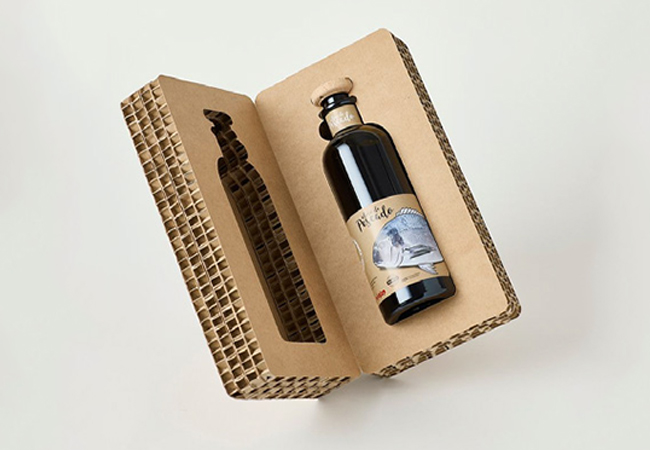
In terms of environmental friendliness: The advantages of honeycomb cardboard are reflected not only in its end-of-life recyclability but also in the cleanliness of its production process. The manufacturing process primarily involves paper slitting, gluing, expanding, laminating, and drying — with no hazardous gas or wastewater emissions, controllable equipment noise, and the ability to maintain high cleanliness standards in the workshop. Unlike foam plastics that require chemical blowing agents or wooden pallets that rely on natural forest harvesting, the full lifecycle environmental impact of honeycomb cardboard is considerably lower. Under current global policies imposing stricter environmental requirements on packaging materials, choosing honeycomb cardboard helps users reduce compliance risks and present positive emission-reduction achievements in corporate social responsibility reports.
Observing market development trends: The honeycomb cardboard industry is experiencing a dual-driven evolution of demand structure optimization and supply capability enhancement. On the demand side, the substitution potential for traditional packaging materials continues to expand. Wood packaging is gradually being replaced by honeycomb cardboard in numerous industrial packaging scenarios due to rising raw material prices, cumbersome fumigation procedures, and increasing export compliance costs. Plastic cushioning materials face public and policy pressure because of marine plastic pollution, leading many brands to voluntarily commit to reducing single-use plastic packaging — creating a market window for all-paper cushioning solutions. Particularly in high-value-added product categories such as consumer electronics, home appliances, medical devices, and photovoltaic modules, where surface protection requirements are stringent and brand owners pay increasing attention to green packaging attributes, honeycomb cardboard has become an ideal choice that meets both performance and sustainability criteria.
On the supply side, the maturation of honeycomb cardboard manufacturing technology has driven both product performance consistency and production efficiency. High-speed honeycomb forming equipment can stably produce large-size honeycomb cores with uniform cell geometry and precisely controlled adhesive application, with web widths covering common pallet dimensions. Automated liner laminating and die-cutting/creasing lines have greatly improved finished-product processing accuracy, enabling rapid forming of complex box styles. These technological advancements have shifted honeycomb cardboard from small-batch customized production to large-scale standardized supply, shortening lead times and reducing unit costs. Meanwhile, the raw material supply chain has become increasingly stable, with wider availability of specialty papers such as high-strength natural kraft paper and water-resistant kraft paper, supporting capacity expansion for manufacturers.
The expansion of application scenarios is also noteworthy. Beyond traditional industrial packaging and export pallets, honeycomb cardboard is demonstrating new growth potential in construction decoration, furniture manufacturing, and exhibition setup. When laminated with gypsum boards or aluminum sheets, honeycomb cardboard can serve as lightweight partition wall material — offering high flatness and easy routing for wiring — suitable for rapid interior finishing. Furniture applications such as desktops, cabinet door inner panels, and shelving made from honeycomb cardboard achieve weight reduction and easy disassembly/shipping while meeting mechanical requirements. For short-term exhibitions and booth construction, display props made from honeycomb cardboard offer design flexibility, flat-pack transportability, and convenient direct recycling after the event. These emerging applications diversify demand risk and provide broader growth space for the honeycomb cardboard industry.
In terms of industry ecosystem: The honeycomb cardboard sector is moving from fragmentation toward consolidation. Scale-focused manufacturers are building differentiated advantages in R&D, quality control, and customer service, with market share concentrating among leading players. At the same time, upstream and downstream collaboration is intensifying — closed-loop coordination among waste paper recyclers, paper mills, honeycomb cardboard manufacturers, and packaging users is beginning to take shape in some regions. Used honeycomb cardboard is collected, repulped, made into kraft paper, and reintroduced into honeycomb production lines, achieving circular material use. This closed-loop model reduces virgin fiber consumption while also lowering the carbon footprint across the supply chain, representing a concrete practice of circular economy principles.
Looking ahead: The honeycomb cardboard market will continue to benefit from the long-term global trend of green transformation. From lightweight packaging design to reusable logistics systems, honeycomb cardboard can contribute value at multiple stages. As recycling networks expand and sorting capacities improve, the post-consumer recycling rate of honeycomb cardboard is expected to rise further, addressing current gaps in recycling channels in certain scenarios. For packaging users, switching from traditional materials to honeycomb cardboard is not merely a compliance-driven passive choice, but a proactive decision based on comprehensive evaluation of performance, cost, and environmental benefits. The growth story of the honeycomb cardboard industry reflects a general logic of industrial material transformation in the era of ecological civilization — the fusion of structural efficiency and ecological attributes is redefining what constitutes a competitive material solution.